Festival of Hearts ~ the evolution of a unique event
In February 2024, The Benji Project held the first Festival of Hearts fundraiser. We wanted to create a unique event for our community - one that incorporated key concepts and experiences from our Mindful Self-Compassion programs. We chose a date close to Valentine’s Day, so that we could elevate the idea of love. Instead of focusing on romantic love, though, we were lifting up Love as compassion for self and others.
To exemplify the mindfulness practices we teach, we crafted a “journey through the senses.” This journey included different tasting bites, created by Chef Arran Stark and Baker Jenn Tillman, with each bite highlighting a different sense. Our program included music from Simon Lynge and Janna Marit, as well as the Nikles Duo.
This immersive experience was satisfying, and we received positive feedback from our guests, but incorporating all five of the senses was complicated in the space of a relatively short program. (And we had a lot of tasting plates to deliver!) To give ourselves a simplified framework going forward, we decided to hone in on one sense per event–crafting a five-year Cycle of the Senses!
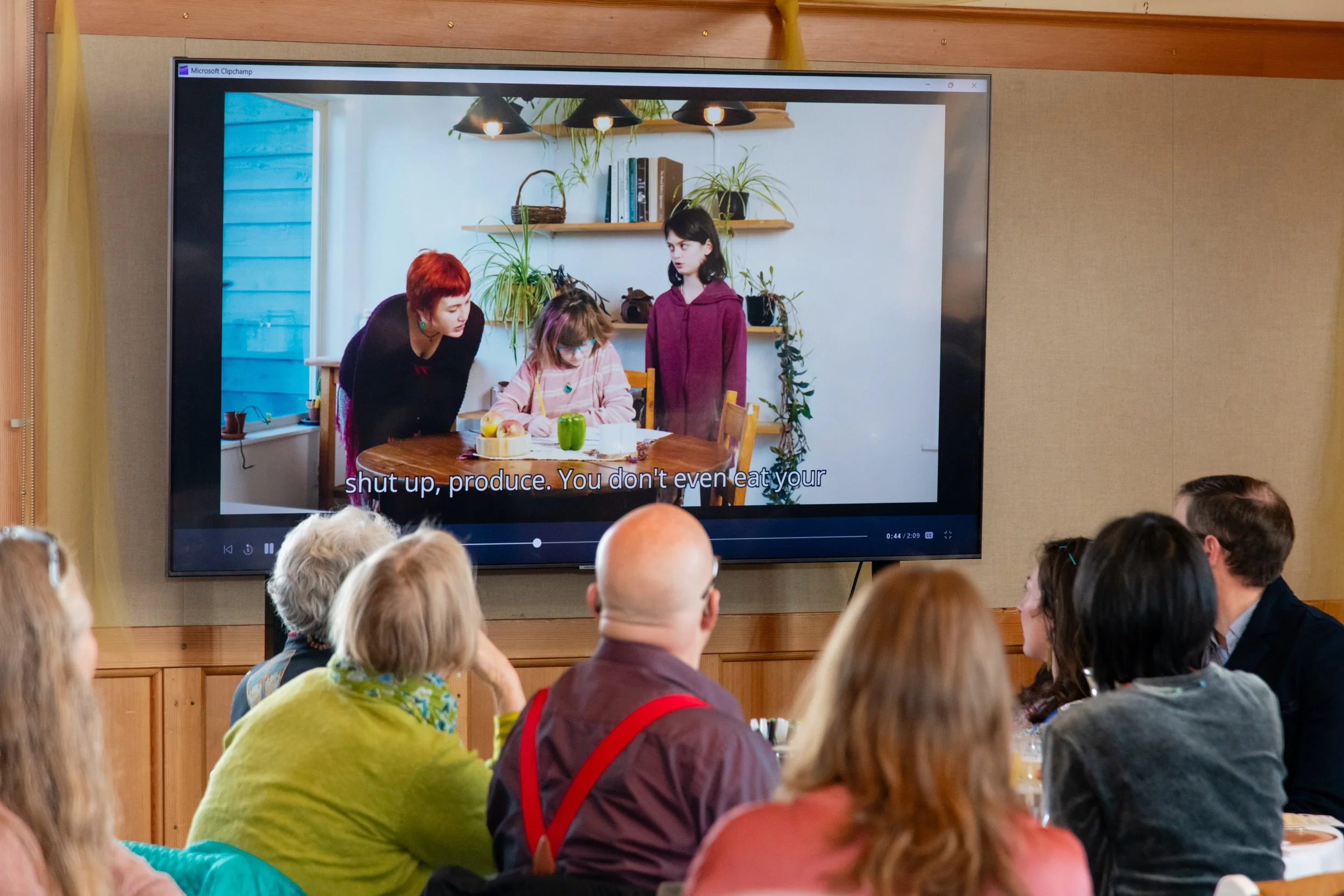
Photo by Deja View Photography
Our second annual Festival of Hearts focused on the sense of sight, leaning into the idea of both inner and outer vision. Videographer Tomoki Sage worked with three young people from our programs to craft a video exploring the concept of inner critical and compassionate voices. Our collaboration with Arran Stark continued, and he focused on beautiful bites that were colorful and visually inspiring.
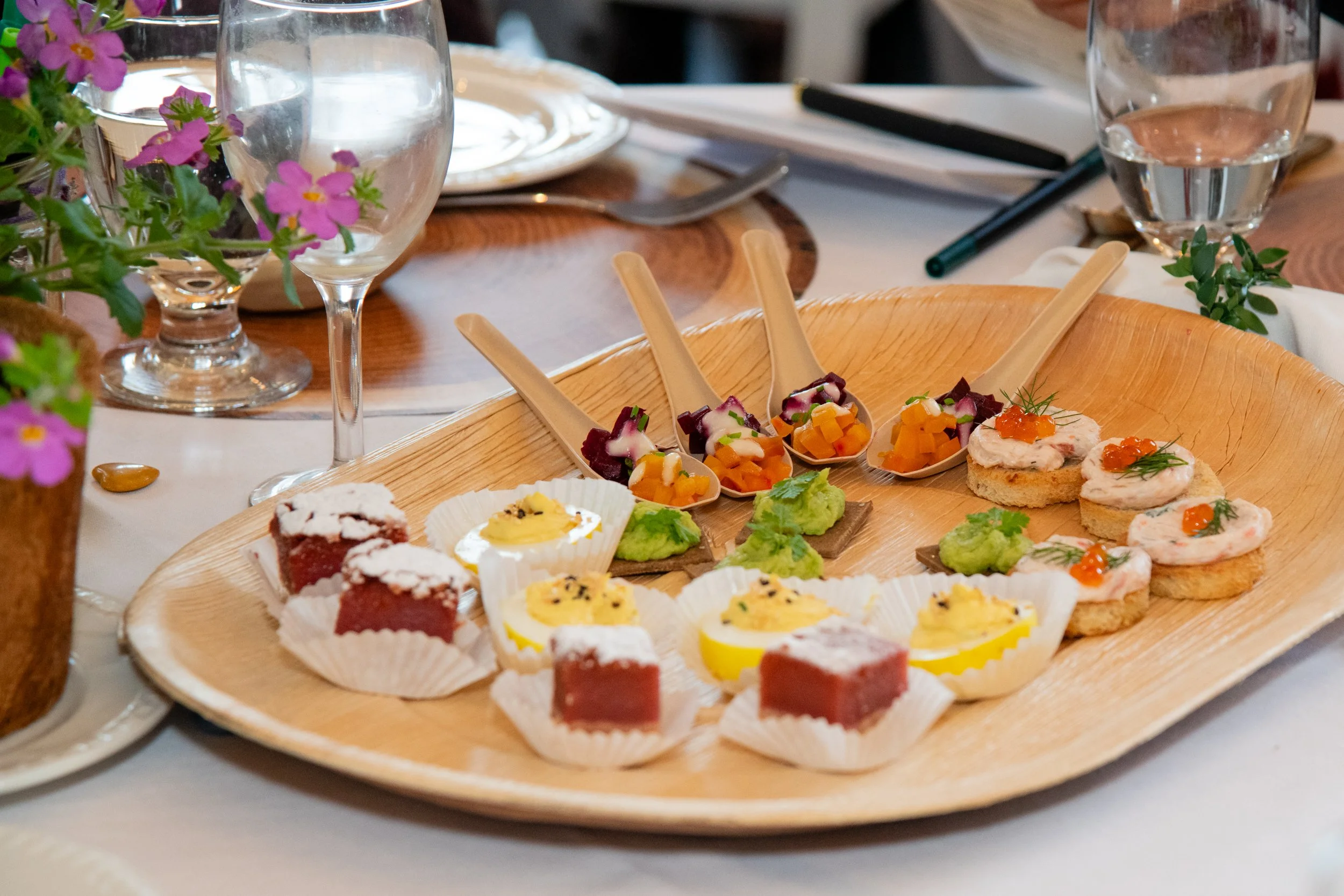
Photo by Deja View Photography
Due to complications with our venue, we ended up pushing the date of this event out to May 2025. It wasn’t close to Valentine’s Day anymore, but the late spring timing aligned with trees budding. Port Townsend Garden Center loaned us some beautiful potted trees to grace the event.
Expanding on the tree theme, Artist Meg Kaczyk created a tree mural, inspired by a madrona tree. Event guests decorated leaves to adorn the tree as a collective art project. When they handed in a donation envelope with their contribution to Benji Project programs, they received a cloth heart to add another layer to the tree.
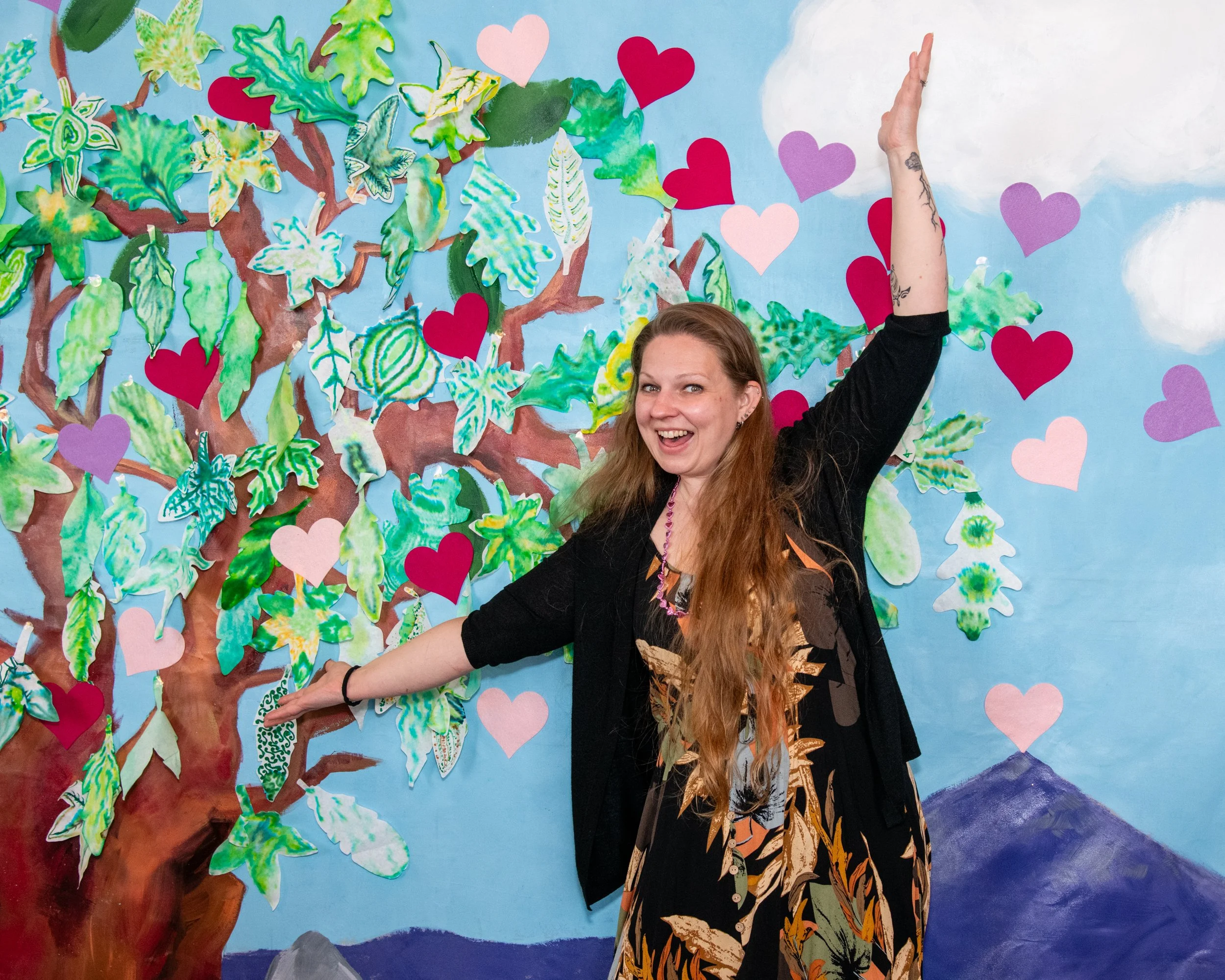
Benji Project Board Member Jennifer Mitchell with the tree mural. Photo by Deja View Photography
This leafy and heart-filled tree mural, a symbol of community vision and love, went to live at Jefferson County Public Health after the event. It has graced the wall of their Pacific Conference Room for the last eight months. It is now being retrieved and will make an appearance this year at our third annual Festival of Hearts.
The focus of Festival of Hearts 2026 is the sense of sound–a celebration of joy and love through sound. When we do outdoor meditations during our programs, one of the first sounds students usually identify is birdsong. The idea of birdsong is guiding the creation of this event.
Come experience for yourself this phase of the Cycle of the Senses, on February 7, 2026!

Winter Afterschool Program Coming Up!
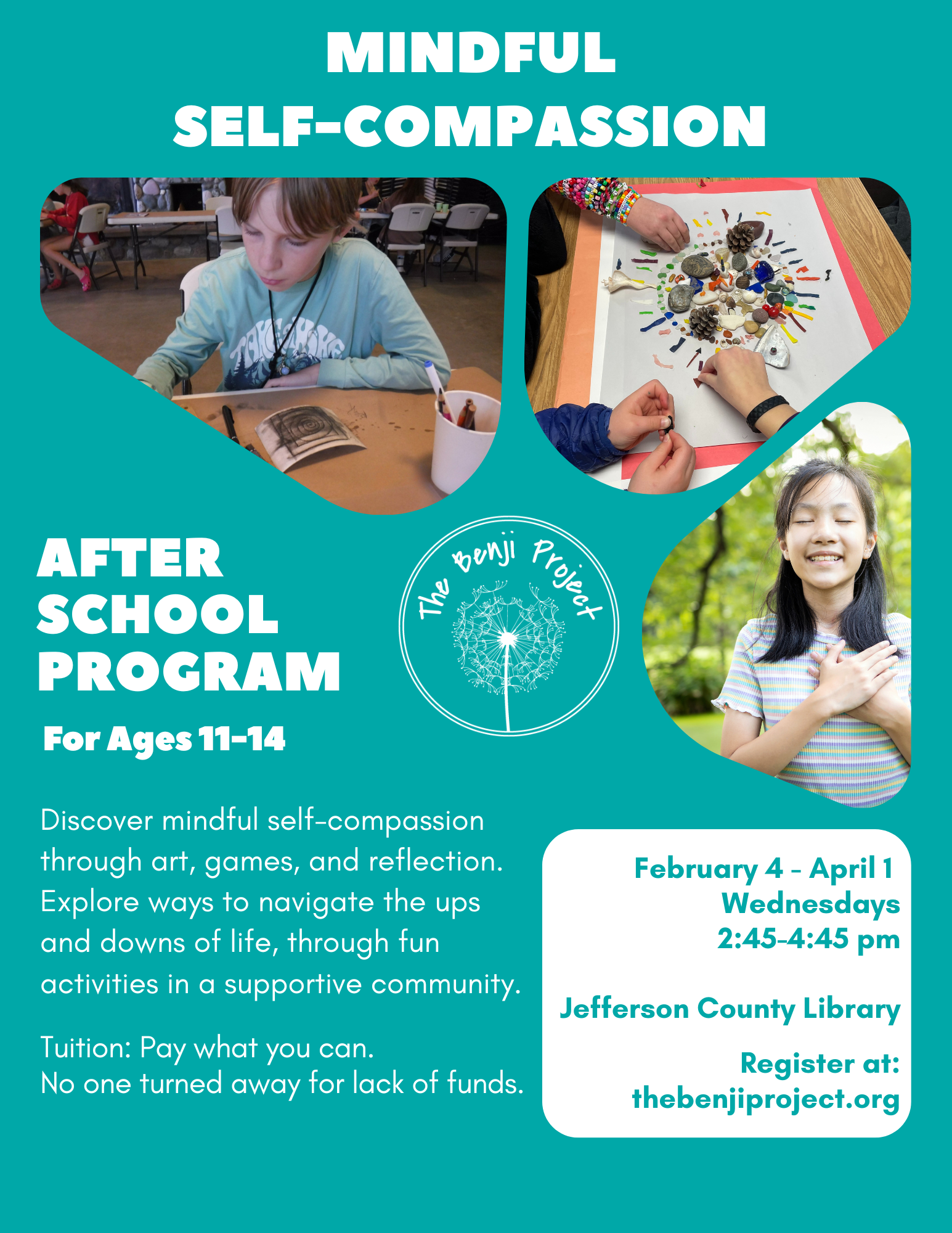
We are excited to be partnering with The Jefferson County Library to offer a winter Mindful Self Compassion 8 week after school program on Wednesday afternoons!
The program is open for enrollment for 11-14 year olds from Jefferson County. Students will learn skills to find calm in stressful times and tools to navigate the ups and downs of life. The activities we use engage students in learning through mindfulness practices, games and art activities. Students become a supportive community through the 8 weeks of sharing and working together.
Students from last year’s program appreciated the skills they were learning. Here of some of the things they reflected on:
“I've learned how to really think about things more than I ever used to"”
"Now I feel like I have other people I can talk to who will support me"
"Now I have people I can think of when I'm going through something and know I'm not the only one"
Registration is open for the program! We have a pay-what-you-can policy designed to welcome anyone in the age range to sign up regardless of ability to pay.
Benji Project instructors Nancy and Steve are excited to be leading the program this season and look forward to connecting with this new group.
To find out more or register: https://www.thebenjiproject.org/after-school
The Benji Project goes to Chimacum 6th Grade!
For the first time, our team had the opportunity to bring Benji Project curriculum, games, and activities to the 6th graders at Chimacum School. We have been developing a partnership there for a number of years, and with strong support from the school counselor and two teachers, we got to spend a full class period with each of the two 6th grade classes for four weeks.
During our time together, we focused on four key themes drawn from the Mindful Self-Compassion curriculum:
Mindfulness
Self-Compassion
Common Humanity
Gratitude
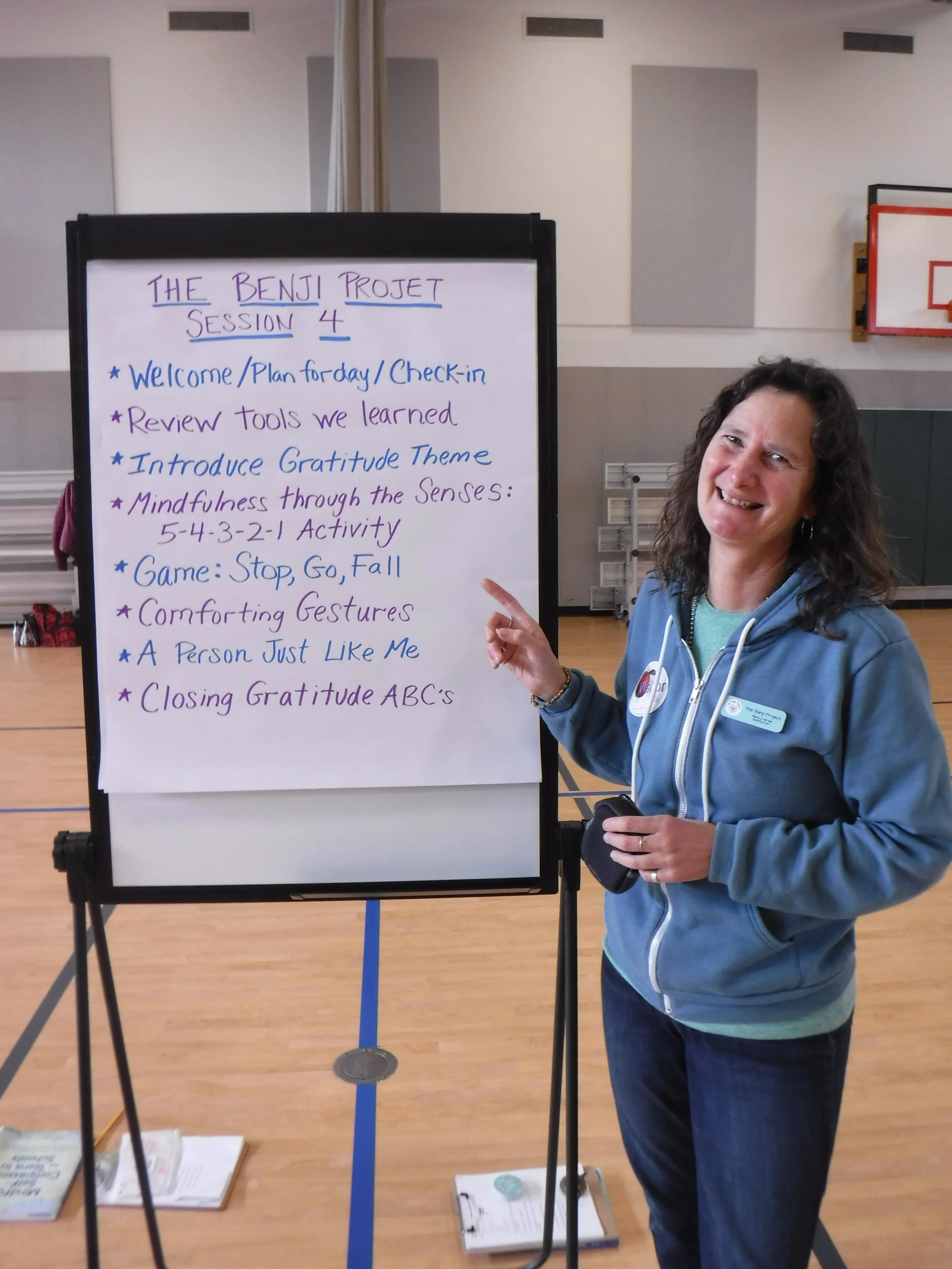
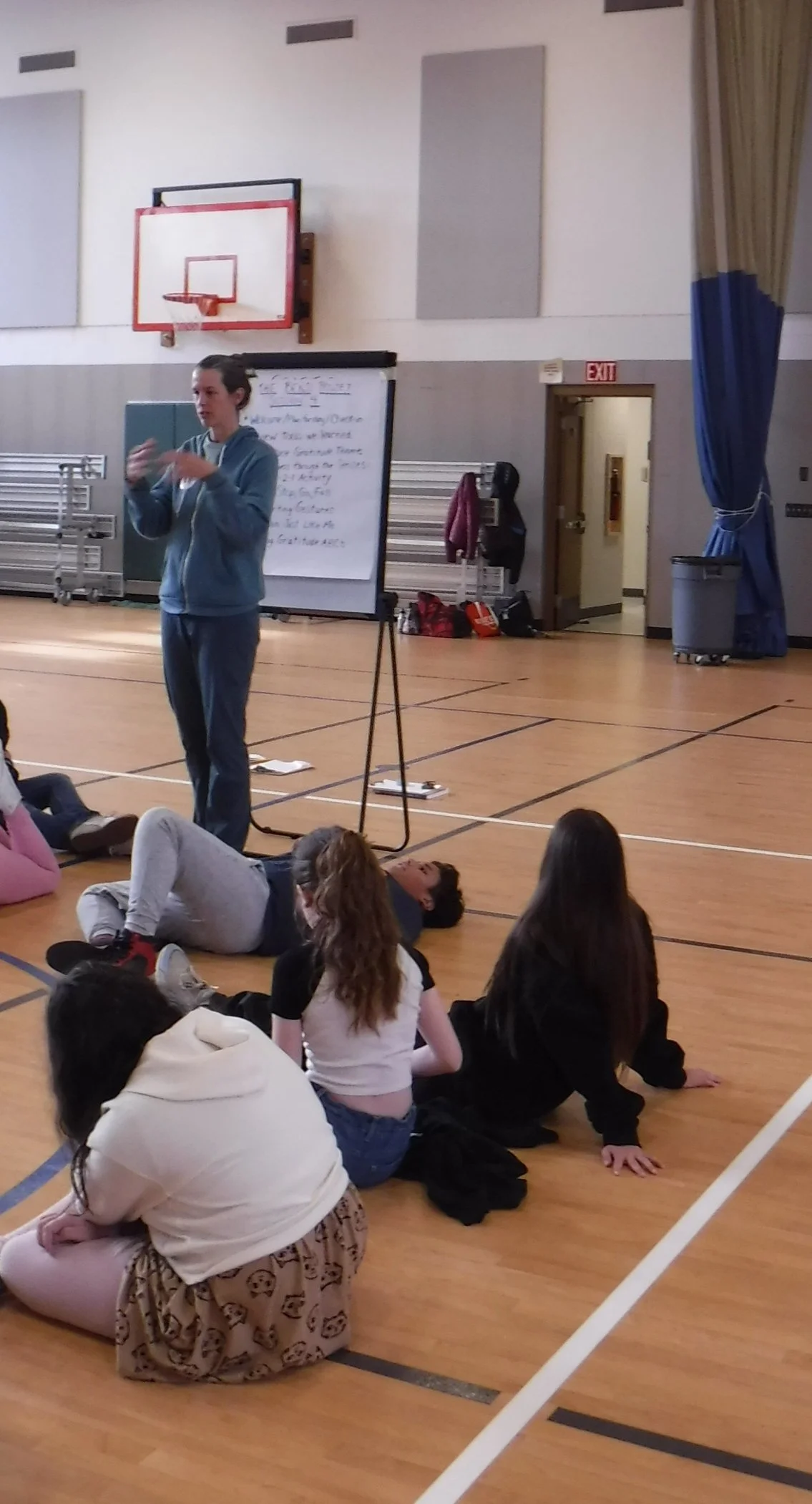
We had a great time with these students, moving between discussion of topics like identifying our emotions or how to calm ourselves in times of stress or anxiety. We also played games like “Stop, Go, Fall” that involves tuning into the senses of sight and hearing to follow a moving group leader’s instructions and “Feelings Charades,” in which students jumped at the chance to act out emotions they pulled from our deck of feelings cards.
After the entire program was complete, the students had time to reflect on their experiences and share feedback with us. Here are some highlights!
Of all the practices we introduced students to, the top three that they learned and plan to use in the future were:
Paying attention to and naming how you're feeling in the moment.
Imagining there is a Compassionate Friend within you.
Thinking about the things you are grateful for.
Over 60% of students replied with a 3 or higher, out of a five-point scale, in response to “How much did these classes help you find your inner compassionate voice?”
More than 80% of students replied with a 3 or higher, out of a five-point scale, in response to “How much did you learn about tools for managing stress in your day to day life?” (with 1 being “not much” and 5 being “a lot”)
Quotes from students:
In response to the question, “What was one practice that you learned during The Benji Project sessions that you plan to use in the future?,” one student wrote, 🌳”Learning to be myself and not being how everyone else wants me to be.”🤨
When asked for any additional feedback they had for us, students shared:
I found more methods of staying happy.
I like all the strategies you guys use to help to calm ourselves!
I really enjoyed getting to do the Benji project because it was fun and I looked forward to it.
Next up: 6th grade at Blue Heron!
How to Use Mindfulness to Reduce Bias
In a time of heightened division and distrust across social groups, “Three Ways Mindfulness Can Make You Less Biased” from the Greater Good Science Center (GGSC) at University of California, Berkeley explores how cultivating mindfulness — defined as increased awareness of our thoughts, emotions and surroundings in a nonjudgmental way — can help reduce bias and improve how we relate to others. (Greater Good).
Research suggests mindful practices don’t necessarily directly target prejudice, but rather act on underlying cognitive biases that shape how we think about and treat people unlike ourselves. (Greater Good)
Here are the three key ways mindfulness helps:
1. Seeing fuller context instead of attributing behaviour to fixed traits
One common error, the correspondence bias, causes us to assume that people’s actions reflect their character rather than their situation. For example, we might assume someone failed a test because they’re lazy rather than considering external factors. In a study where participants practiced a brief mindfulness activity, they were less likely to assume that an essay writer’s assigned position reflected their true belief — demonstrating reduced correspondence bias. (Greater Good)
By becoming more aware of context and our automatic assumptions, mindfulness may help us form fairer judgments of others, especially across social groups.
2. Reducing our “negativity bias”
Humans tend to pay more attention to negative experiences than positive ones — a survival-oriented mechanism. (Greater Good)
That bias can make us wary of new social situations, especially with people different from us. But studies show that people more practiced in mindfulness or given brief mindfulness instruction show reduced brain-reactivity to negative stimuli (like distressing photos) and less fear of rejection in social interactions. (Greater Good)
This means mindfulness might help us open up to more diverse interactions, rather than shutting down or avoiding them out of fear or caution.
3. Seeing others as equals — reducing “self-positivity bias”
We often maintain positive views of ourselves by comparing ourselves favourably to others — the self-positivity bias. (Greater Good)
In one experiment, participants who practiced mindfulness (or loving-kindness meditation) were less likely to quickly associate themselves with positive words and strangers with negative ones. In other words, they showed less of that “better-than-others” mindset. (Greater Good). Such changes may foster empathy and connection rather than competition or disregard.
Takeaway for your own life:
By practising even simple mindful actions — like paying attention to your thoughts when you meet someone new, noticing your automatic judgments, or bringing non-judgmental awareness to a social interaction — you may start to slow down your cognitive shortcuts, feel less reactive to social anxiety, and open up to seeing people as whole, context-rich individuals rather than stereotypes.
If enough of us did that, we might bridge some of the divides that feel so large now.